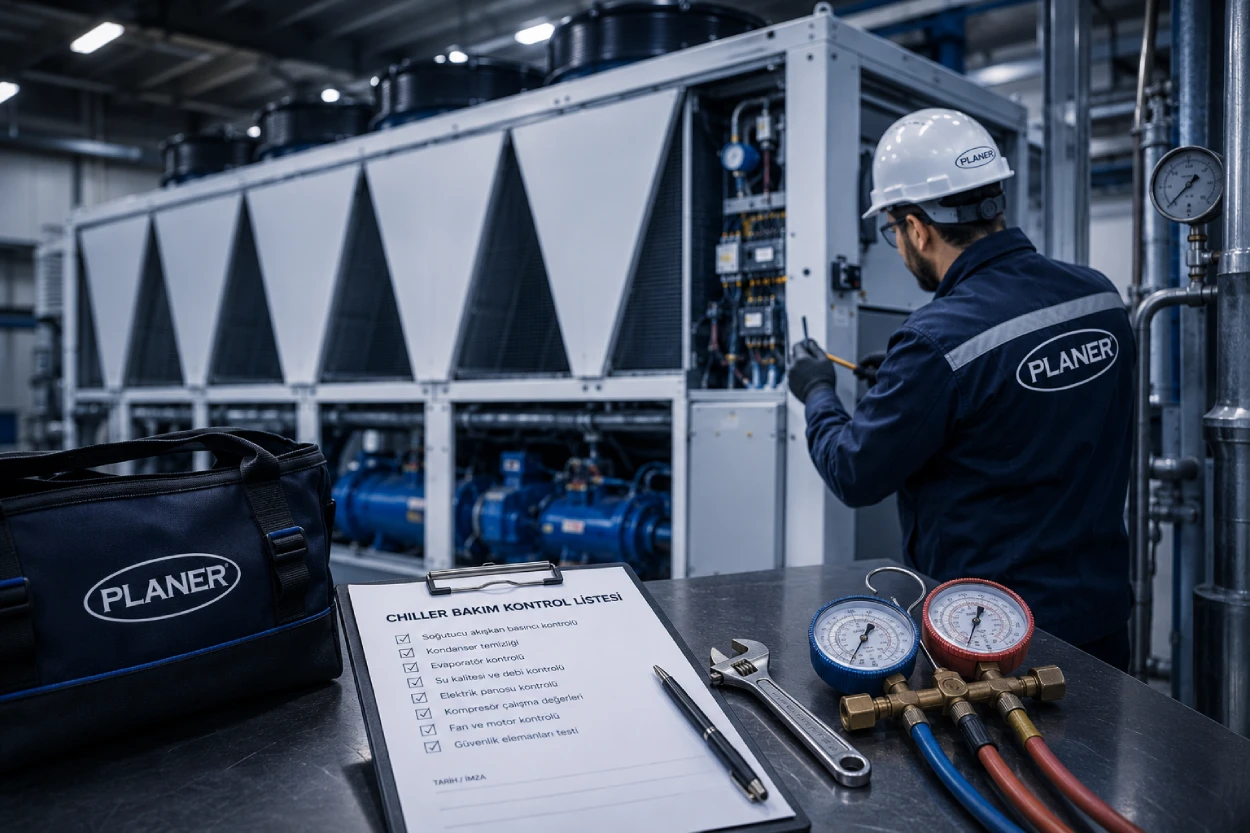
Chiller maintenance is a non-negotiable engineering discipline that keeps a cooling system performing at its day-one efficiency for years to come. Without a periodic, preventive program, chillers lose efficiency in insidious ways: dust building up on the condenser coil, contaminated water, sensors that have drifted out of calibration and small overlooked leaks all drive up energy bills, shorten compressor life and, more often than not, escalate into failures that halt production. In this article we present an actionable chiller maintenance checklist that breaks planned upkeep into daily, monthly and yearly tasks — the goal being not to repair a fault in the field, but to prevent it from ever occurring.
Why Is Regular Chiller Maintenance Essential?
Although a chiller may always look the same, its components wear with every operating hour and its heat-transfer surfaces gradually foul. Even a thin layer of dirt on the condenser raises the condensing temperature, forcing the compressor to run at higher pressure and therefore draw more electricity. In other words, the cost of neglect is paid first in energy consumption and later in unexpected downtime.
The tangible returns of regular preventive maintenance are clear: preserved efficiency and COP/EER values, a correct refrigerant charge, reduced electricity and energy losses, longer equipment life and — most importantly — the prevention of chiller breakdowns. A planned program catches a small deviation before it turns into an alarm, eliminating the vast majority of unplanned stoppages.
Daily and Weekly Checks
The most frequent checks are usually the cheapest; observations that take only a few minutes can reveal a developing problem at an early stage. These steps can be performed at the operator level while the unit is running, and they gain real value when logged consistently.
- Review alarm and warning messages on the panel, and note active and historical fault records
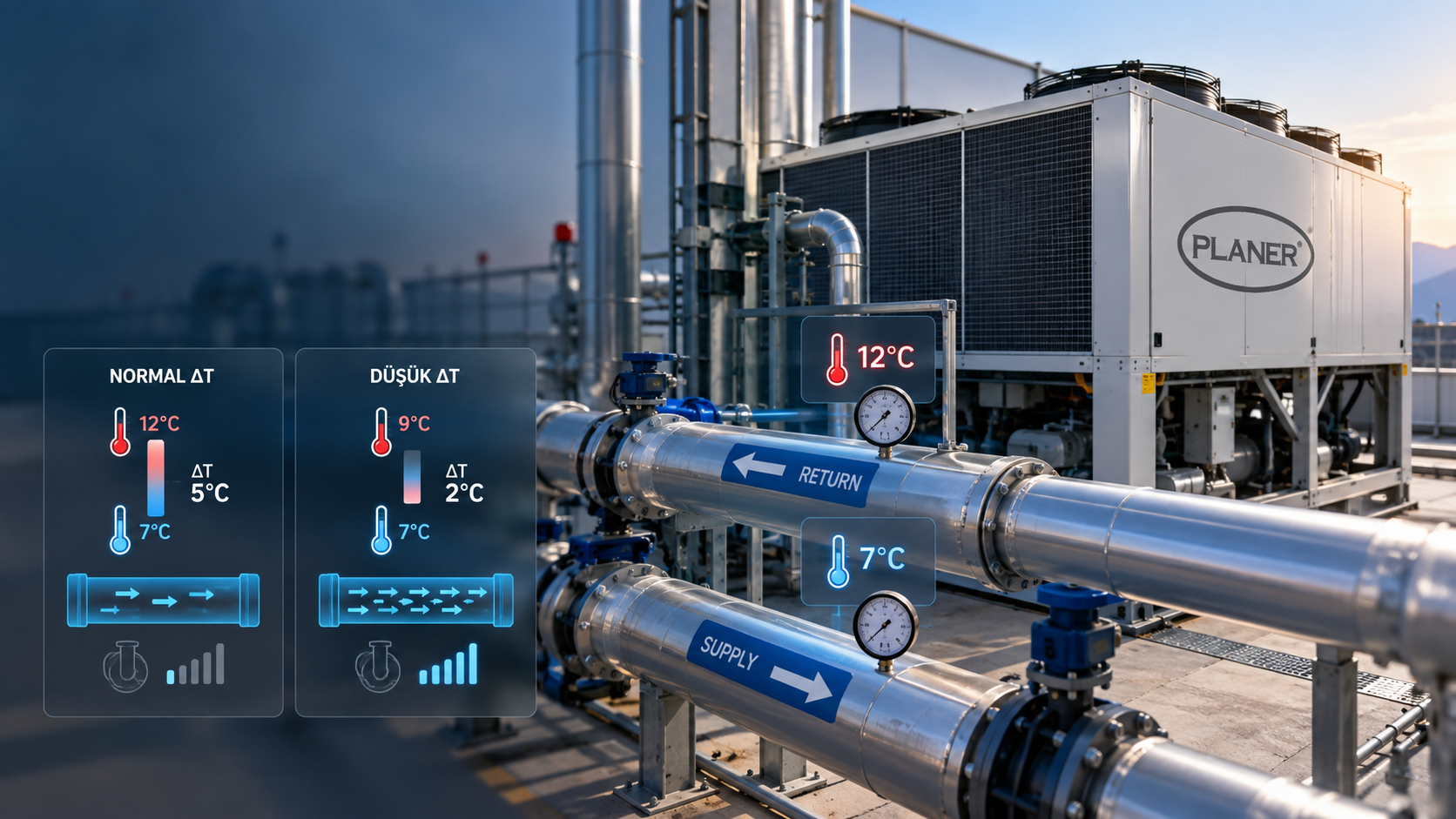
- Read the chilled-water inlet/outlet temperatures and the ΔT value, comparing them against the normal range
- Monitor the high- and low-pressure (condenser/evaporator) gauges
- Listen for any abnormal noise, vibration or odour from the compressor and fans
- Check the flow rate, pump operation and the absence of any visible leaks in the water circuit
- Record the measured values in a maintenance log or monitoring system to track trends
Monthly Periodic Chiller Maintenance Steps
Monthly tasks go beyond daily observation to touch the heat-transfer surfaces and fluid circuits. At this stage some of the work requires the unit to be safely shut down; electrical isolation and lock-out/tag-out rules must be observed.
The single most critical item this month is condenser cleaning. On air-cooled models, the layer of dust, lint and oily grime on the finned-tube coil must be removed with low-pressure air or a suitable chemical without crushing the fins; on water-cooled models, scale and biofilm formation in the plate or shell-and-tube exchanger must be monitored.
- Cleaning the condenser coil: on air-cooled units, clearing dust from the fins/coil; on water-cooled units, checking for fouling
- Checking the refrigerant (R407C / R134a) charge level, inspecting the sight glass for bubbles and performing a leak search
- Inspecting the water and glycol circuit: mixture ratio, freeze protection, pH and contamination
- Cleaning or replacing the water filter, strainer and any air filters
- Verifying the pump, expansion tank and manometer pressures
Annual Maintenance and Calibration
Annual maintenance is an in-depth overhaul that safeguards the system's hidden but most expensive components, and it should generally be carried out by a competent technical team. Electrical connections, the compressor and the safety equipment are all inspected one by one within this scope.
- Assessing compressor performance, oil level and operating currents
- Inspecting the electrical panel: terminal tightness, contactors, fuses and cable overheating
- Deep cleaning of the condenser and evaporator exchangers; chemical descaling on water-cooled units
- Calibrating the temperature and pressure sensors, and checking the thermostatic/electronic expansion valve
- Testing the safety pressure switches, the safety valve and all alarm functions
- Inspecting the fan motors, bearings and vibration mounts
Key Maintenance Differences by Chiller Type
The focus of a maintenance program shifts according to the chiller's condensing method. For air-cooled chillers, the key to success is clean airflow: continuously clearing dust from the fins and coils directly prevents the high-pressure faults caused by a blocked coil. In dusty environments the cleaning frequency should be increased.
For water-cooled systems, water quality decides the game. Water treatment keeps scale, corrosion and biofilm under control; in facilities that use a cooling tower, the tower fill, drift eliminators and condenser-water chemistry must be monitored regularly. In dry cooler and hybrid solutions, cleaning the external surface and maintaining the water-spray system must not be neglected either.
Tying the checklists above to an annual calendar and running them under proper record-keeping will markedly protect both the efficiency and the lifespan of your chiller. To build a periodic maintenance plan tailored to your facility, determine the right cleaning frequency or take on the annual overhaul, you can contact Planer's engineering and service team — together we can keep your system performing as it did on day one.